Spyderco Brand Spotlight — The Weird, Wonderful Knife Company That Changed Everything
Walk into any knife store, scroll through any EDC forum, or glance at a pocket clip in the wild — and you’ll spot the sign. A small, perfectly round hole. No thumb stud. No flipper tab. Just a hole.
That hole belongs to Spyderco. And if you don’t know the story behind it, you’re missing one of the most improbable success stories in the knife world.
Spyderco didn’t just make knives. They rewrote the rules. One-handed opening. Pocket clips. Serrations on a folding knife. Weird blade shapes that actually worked. They were laughed at by the old guard — and then copied by all of them.
The Origin Story: A Sharpener, a Spider, and a Crazy Idea
Sal Glesser wasn’t a knifemaker when Spyderco started in 1976. He was an inventor who’d designed a portable sharpening tool — the Tri-Angle Sharpmaker. He and his wife Gail sold them out of a van, driving to trade shows and gun fairs across America.
The real lightning bolt hit in 1981. Sal sketched a folding knife that could be opened with one hand — a radical idea at the time. The blade had a large round hole that your thumb could catch and flick. He called the first prototype the C01 Worker.
Knife dealers told him it would never sell. “It looks like a spider,” someone said. Sal embraced it — and the Spyderco name was born.
Fast forward forty-plus years: Spyderco is headquartered in Golden, Colorado, produces knives in the USA, Japan, Taiwan, Italy, and China, and has one of the most obsessive fan bases in the outdoor industry. Not bad for a guy who started with a sharpening stone.
What Makes a Spyderco a Spyderco
The Round Hole™
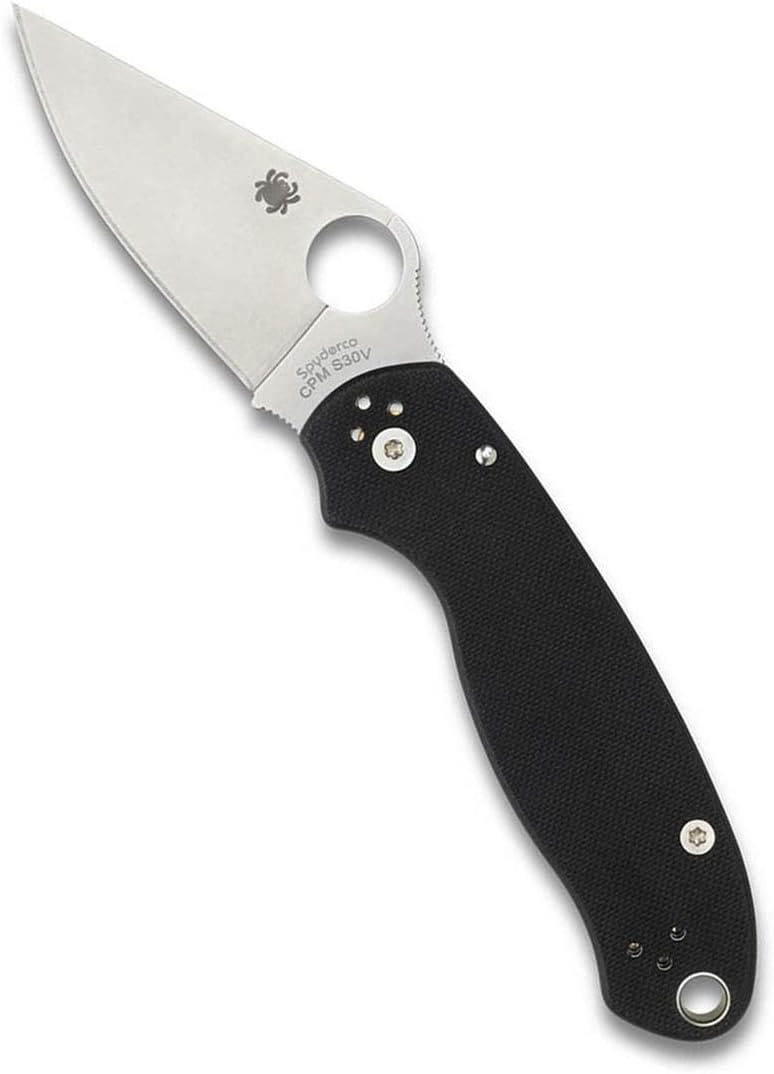


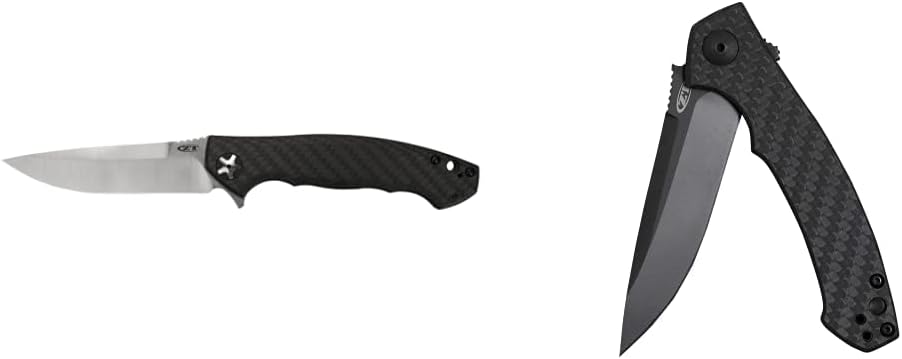
Trademarked. Iconic. Functional. The round hole isn’t a gimmick — it’s the best one-handed opening mechanism ever designed. Works with gloves. Works with wet hands. Works with cold fingers. No tiny thumb stud to fumble with. Spyderco’s patent on the round hole expired years ago, but nobody’s managed to do it better.
The Pocket Clip
Spyderco was the first company to put a pocket clip on a folding knife — the C01 Worker shipped with one in 1981. Today, every folding knife on the market has one, and Spyderco’s hourglass clip design is still among the best. Most models give you four-position carry (tip-up, tip-down, left, right), and the deep-carry wire clip on models like the Para 3 is an EDC favorite.
The Leaf-Shape Blade
While everyone else was making drop-points and clip-points, Spyderco leaned into the leaf-shaped blade — wider near the tip, with a strong belly for slicing. It’s not just distinctive; it’s practical. The broad profile gives you excellent control during draw cuts, and the flat grind (almost always full-flat) makes these knives superb slicers.
Steel Obsession
Spyderco treats blade steel like a religion. They were the first production company to use CPM-S30V, CPM-S90V, CTS-204P, and a dozen other exotic steels. They run a regular “Sprint Run” program where they make small batches of popular models in rare steels — and collectors lose their minds every time. If you want to try Maxamet, K390, CruWear, or MagnaCut without going full custom, Spyderco is your ticket.
The Must-Have Spyderco Knives in 2025
1. Spyderco Paramilitary 2 — The Gold Standard
If Spyderco had a flag, the PM2 would be on it. The Paramilitary 2 (model C81GP2) is the knife that defined the modern EDC category. It features a 3.44-inch CPM-S45VN blade, a compression lock (arguably the strongest and most fidget-friendly lock in production), and G-10 handle scales. The ergonomics are near-perfect — the forward finger choil lets you choke up for detail work, while the neutral handle shape fits every grip style.
- Blade: 3.44″ CPM-S45VN, full-flat grind
- Lock: Compression Lock
- Weight: 3.75 oz
- Best for: The one-knife-to-rule-them-all EDC
Cons: The tip is delicate — don’t pry with it. And the hump in the closed position takes up more pocket space than you’d expect.
Check price on Amazon Spyderco Paramilitary 2
2. Spyderco Para 3 — The PM2’s Pocketable Little Brother
Take everything great about the PM2, shrink it to a 3-inch blade, and you get the Para 3. It’s legal in more jurisdictions, disappears in the pocket, and still gives you that compression lock action that’s borderline addictive. The Para 3 Lightweight version swaps G-10 for FRN (fiberglass reinforced nylon) and drops the weight to just 2.4 ounces. If the PM2 is overkill for your daily needs, the Para 3 is the sweet spot.
- Blade: 2.95″ CPM-S45VN
- Lock: Compression Lock
- Weight: 3.4 oz (G-10), 2.4 oz (Lightweight)
- Best for: Urban EDC, office carry, travel-friendly size
Check price on Amazon Spyderco Para 3 Lightweight
3. Spyderco Tenacious — Proof That Budget Doesn’t Mean Bad
The Tenacious is Spyderco’s most accessible knife — made in China, priced under $60, and built with 8Cr13MoV steel that’s easy to sharpen and surprisingly decent at edge retention. Don’t let the price fool you: the ergonomics are pure Spyderco DNA. The full-flat grind on the 3.39-inch blade slices like a champ, and the G-10 scales feel premium at a price that doesn’t hurt. This is the knife that gets people hooked on Spyderco.
- Blade: 3.39″ 8Cr13MoV, full-flat grind
- Lock: Liner Lock
- Weight: 4.2 oz
- Best for: First Spyderco, budget beater, toolbox knife
Check price on Amazon Spyderco Tenacious
4. Spyderco Dragonfly 2 — Tiny Knife, Giant Reputation
The Dragonfly 2 is a masterclass in small-knife design. With a 2.28-inch blade, it’s tiny — but the forward choil lets you get a full four-finger grip, which is engineering sorcery at this size. The VG-10 steel (made in Seki City, Japan) holds an edge well, and the FRN handle with bi-directional texturing is grippy as hell. At 1.2 ounces, you’ll forget you’re carrying it — until you need it. Then it punches way above its weight class.
- Blade: 2.28″ VG-10
- Lock: Back Lock
- Weight: 1.2 oz
- Best for: Minimalist carry, keychain alternative, office-safe EDC
Check price on Amazon Spyderco Dragonfly 2
The Spyderco Rabbit Hole: Sprint Runs and Collecting
A quick warning: Spyderco collecting is dangerous for your wallet. The Sprint Run model — where limited batches of classic designs get dressed up in exotic steels and handle materials — creates a feeding frenzy. A PM2 in CruWear with Micarta scales. A Para 3 in Maxamet. A Manix 2 in CPM-M4. These drops sell out in hours, sometimes minutes.
There’s also a thriving aftermarket for scales, clips, and hardware. Companies like Flytanium and Ripps Garage Tech exist almost entirely to customize Spydercos. You can build a PM2 that looks nothing like the one that came out of the box.
Who Should Buy Spyderco?
If you want a tool that cuts extremely well, carries comfortably, and comes from a company that genuinely innovates rather than copies, Spyderco is for you. If you want Instagram knife-flipping cred, maybe look elsewhere — though the compression lock is plenty fidgety.
Spyderco appeals to people who appreciate function-first design. The aesthetics are polarizing — you either love the hump and the hole or you don’t — but the performance is indisputable. These knives cut, and cut well, and that’s the whole point.
Frequently Asked Questions
Are Spyderco knives worth the money?
Yes. Even their budget models (Tenacious, Resilience) deliver excellent build quality. Mid-range models like the Para 3 and PM2 use premium materials and manufacturing that rival much more expensive custom knives. The heat treatment on Spyderco’s steels is consistently among the best in the production knife world.
Where are Spyderco knives made?
Spyderco manufactures in multiple countries: Golden, Colorado (USA) for premium models like the PM2, Para 3, and Native 5; Seki City, Japan for the Delica, Endura, and Dragonfly series; Taichung, Taiwan for high-end models like the SpydieChef and Swayback; Maniago, Italy for the slipjoint and LionSpy designs; and China for the budget Tenacious/Resilience line. Country of origin is clearly marked on every blade.
Which Spyderco should I buy first?
If you have the budget, the Paramilitary 2 is the definitive Spyderco experience. If you want something more pocketable, go Para 3. If you’re testing the waters without spending much, the Tenacious at under $60 is the best entry point. And if you want to travel light, the Dragonfly 2 will surprise you with how capable a tiny knife can be.
Why do Spyderco knives have a hole in the blade?
The round hole is Spyderco’s trademarked one-handed opening mechanism. It was revolutionary when introduced in 1981 — before thumb studs or flipper tabs existed. The hole allows ambidextrous, gloved, wet, and cold-hand opening. It’s also why Spyderco blades have that distinctive hump, which accommodates the hole without weakening the blade.
Ready to Join the Spydie Club?
Spyderco isn’t for everyone — and they’re fine with that. But if you want a knife company that prioritizes cutting performance, materials science, and ergonomics over looking tactical on Instagram, there’s nothing else like them. Pick up a Tenacious to test the waters, or go straight for the PM2 if you know what you’re doing. Either way, you’ll understand what the hole is all about.
BladeOwl is reader-supported. When you buy through our links, we may earn an affiliate commission at no extra cost to you. Happy cutting.