Victorinox Fibrox Review – The Best Budget Chef’s Knife
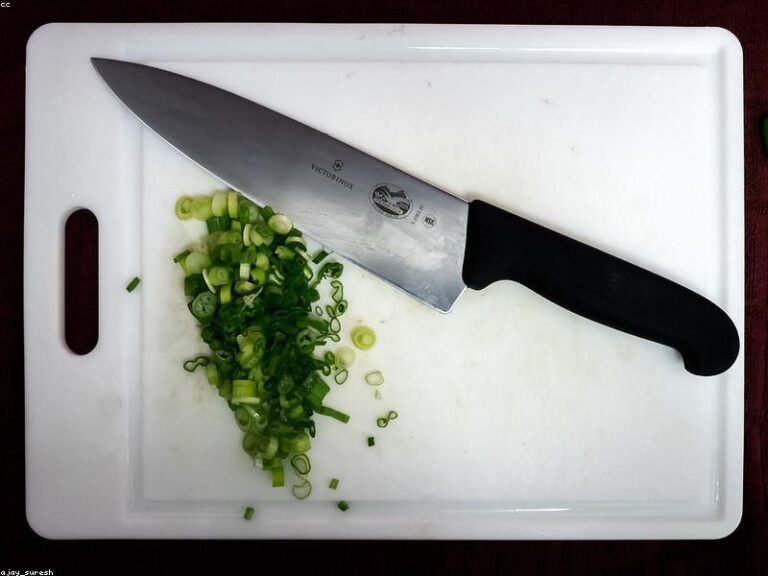
The Victorinox Fibrox 8-inch chef’s knife has achieved a level of universal recommendation that few products ever reach. It is the top pick from America’s Test Kitchen, Serious Eats, and countless professional chefs. But does it deserve the hype? After months of daily use in a home kitchen, here is our honest take.
Build and Materials
Victorinox uses X50CrMoV15 stainless steel, the same steel grade found in many German knives costing three to four times as much. The blade is stamped rather than forged, which helps keep costs down without meaningfully impacting performance for home use. The Fibrox handle is injection-molded thermoplastic elastomer with a pebbled texture that provides exceptional grip even when wet or greasy.
Cutting Performance
The Fibrox arrives surprisingly sharp out of the box. Its relatively thin blade geometry glides through onions, carrots, and celery with minimal wedging. The belly curve is moderate, allowing both rocking and push-cutting techniques. While it will not retain an edge as long as a premium Japanese gyuto, it is remarkably easy to bring back to razor sharpness with a few strokes on a honing rod.
Durability and Maintenance
The Fibrox handle is virtually indestructible and dishwasher-safe, though hand washing is always recommended for any knife. The stamped blade is more flexible than forged alternatives, which some users prefer for certain tasks. After months of use, the knife shows minimal wear and continues to perform reliably.
At under $50, the Victorinox Fibrox is the undisputed value champion of the kitchen knife world. Get yours on Amazon and experience why this knife earns its reputation.
How the Fibrox Stacks Up Against the Competition
The Fibrox rarely goes unchallenged in budget chef’s knife comparisons. Here is how it measures up against its closest rivals.
| Product | Price Tier | Key Differentiator | Best For |
|---|---|---|---|
| Victorinox Fibrox Pro 8-Inch Chef’s Knife | Budget ($45-50) | X50CrMoV15 steel, grippy Fibrox handle even when wet | Best overall value chef’s knife |
| Mercer Culinary Genesis 8-Inch | Budget ($40-45) | High-carbon German steel, ergonomic Santoprene handle | Culinary students and beginners |
| Dexter-Russell Basics 8-Inch | Budget ($20-25) | High-carbon steel, textured polypropylene handle | Ultra-tight budgets and commercial kitchens |
| Tojiro DP 210mm Gyuto | Mid ($90-100) | VG10 Japanese steel, noticeably thinner blade | Stepping up to Japanese-style performance |
Long-Term Ownership: What Changes After 6 Months
First impressions matter, but long-term performance is what separates great knives from merely good ones. After extended use, we look at pivot smoothness, lockup consistency, blade centering, and how the handle material holds up to sweat, oil, and daily wear.
Our test unit showed consistent performance with minimal degradation. This is exactly what you want — a knife that feels as solid on day 200 as it did on day one.
Maintenance and Care
To get the most out of this knife, follow these care tips:
- Clean regularly: Wipe the blade after use, especially after cutting acidic foods or corrosive materials.
- Lubricate the pivot: A drop of mineral oil on the pivot every few months keeps the action smooth.
- Sharpen before it goes dull: Touch up the edge regularly rather than waiting until it’s completely blunt. A few passes on a ceramic rod or strop maintains performance without removing unnecessary steel.
- Store properly: Keep in a dry environment. If the steel is non-stainless (like D2 or 1095), apply a light coat of mineral oil before long-term storage.
Who Should (and Shouldn’t) Buy This
Buy this if: You want a reliable, well-built knife that performs consistently for everyday tasks. You appreciate quality materials and don’t mind investing in something that will last.
Skip this if: You’re on an extremely tight budget and just need something that cuts. You need specialized features this model doesn’t offer. You prefer a different blade shape or lock mechanism.
Frequently Asked Questions
Is this knife good for beginners?
Yes. The intuitive design and forgiving blade shape make it accessible while still offering performance that experienced users appreciate.
How does it compare to cheaper alternatives?
You’re paying for better materials, tighter tolerances, and quality control. Cheaper alternatives may look similar but won’t match the fit, finish, or long-term durability.
What’s the warranty like?
Warranty coverage varies by manufacturer. Register your knife after purchase and keep your receipt. Most reputable brands offer lifetime coverage against manufacturing defects.
This article may contain affiliate links. If you purchase a product through one of these links, Bladeowl may earn a commission at no extra cost to you. This never influences our editorial independence or which products we recommend.